Why Five Volunteers Are Running a Public Works Department
This is the strange reality of neighborhood self-governance. You may have joined the board to help your neighbors. Somewhere along the way, you discovered you were also running a very small public works department.
Most people do not join an HOA board expecting to manage infrastructure. They expect budgets, meetings, maybe a landscaping contract, perhaps the occasional dispute over a fence or parking. Then someone opens the reserve study.
The association owns a road.
Or a detention pond.
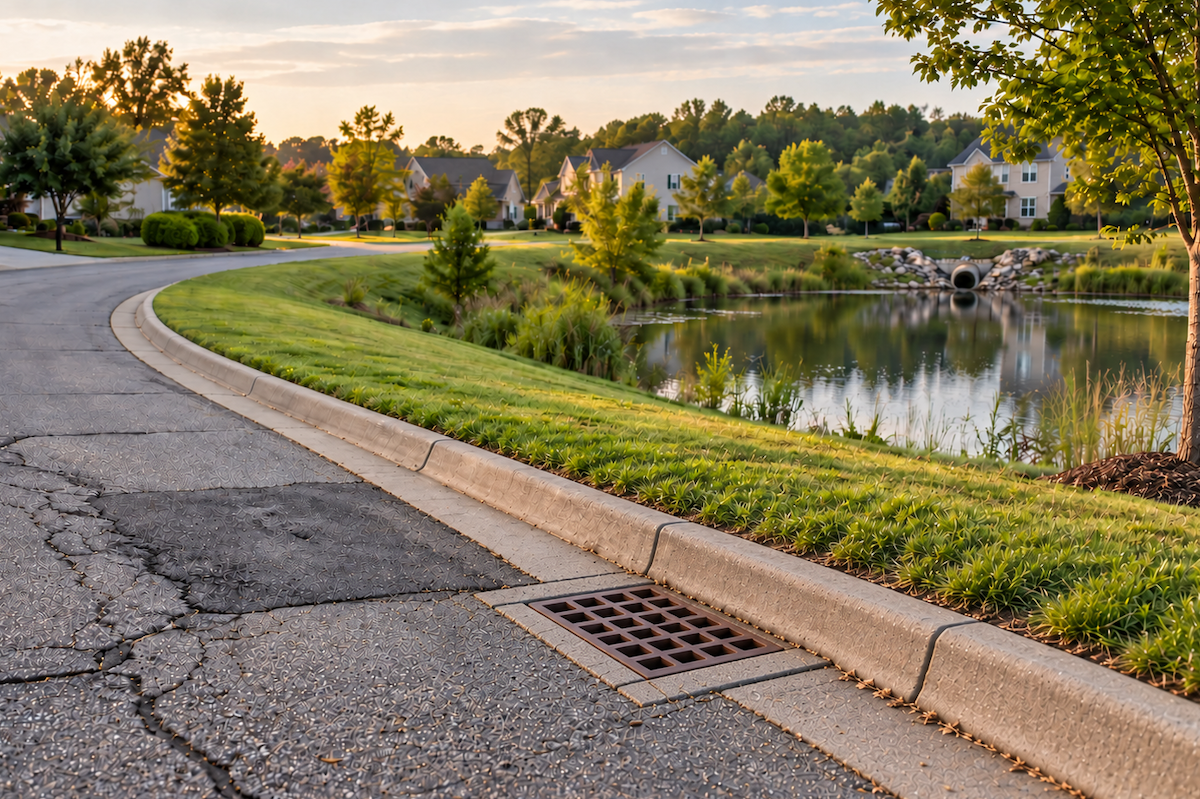
Or a stormwater system, streetlights, retaining walls, pathways, drainage structures, open space — sometimes several of them.
Suddenly five neighbors are making decisions that amount to running a small public works department. That is not an exaggeration.
Washington state describes common-interest communities as organizations that may be responsible for maintaining shared infrastructure including streets, lights, sewers, retention ponds, elevators, and garages. The money for that work comes from mandatory owner assessments. And in many self-governing communities, there is no professional public works staff behind the board. There are only volunteers.
How Did This Become the HOA’s Job?
Usually, it starts long before the current owners arrive. A developer creates a subdivision. Local government approves the development. Some roads, drainage facilities, open space, or other improvements remain private rather than becoming government-owned infrastructure. The developer maintains them initially. Then the homes are sold. Eventually the developer leaves. The infrastructure stays. Responsibility passes to the owners, often through the HOA.
Clark County in Washington state puts this plainly. It says HOAs are established by subdivision developers to maintain common grounds, amenities, and sometimes stormwater or drainage facilities. For private stormwater facilities, the arrangement can be even more explicit. Clark County documents say stormwater tracts may be conveyed to an HOA, which then becomes responsible for their long-term maintenance and operation.
So a board elected years later may inherit obligations created when the subdivision was first approved. The board did not design the road or choose the drainage system. It may not even know why the infrastructure was made private. But now it has to maintain it.
The Work Still Has to Be Done
There is nothing unreasonable about a new director not knowing how pavement deteriorates or how often a detention pond needs maintenance. Board members are not expected to become engineers. But the road still ages. The pond still fills with sediment. Storm drains still clog. Asphalt still cracks. And eventually somebody has to decide what to do about it. That is where “we’re just volunteers” stops being an answer.
Being a volunteer explains the knowledge gap. It does not stop the infrastructure from deteriorating. The board’s job is not to know how to design a stormwater system. It is to know that the association owns one, understand that it requires maintenance, find qualified advice when necessary, and make sure the community is preparing financially for the work.
Private Does Not Mean Optional
Pierce County in Washington state requires owners of private stormwater systems, including systems on commonly owned neighborhood property, to inspect and maintain them. The county may inspect those systems, but the maintenance responsibility remains with the private owners. Clark County works similarly. Privately owned stormwater facilities must meet maintenance standards, and the county inspects them. If maintenance is inadequate, the owner can be required to bring the facility back into compliance.
That is an interesting arrangement. The infrastructure is privately owned. The maintenance bill is private. But the obligation to maintain it may still be enforced by government. Private roads are even more straightforward. Pierce County says private roads are not maintained by any government body. Residents generally have to determine what maintenance is needed and how to pay for it themselves.
For an HOA board, that can mean deciding when to crack-seal, resurface, reconstruct, clear drainage, obtain engineering advice, solicit bids, and collect enough money to pay for all of it. That is public-works work, even if nobody calls it that.
The Problem With Waiting
Infrastructure has an inconvenient characteristic. It does not care whether the board feels ready. A board can postpone a discussion about pavement for a year.
The pavement will continue aging. It can postpone reserve contributions. The eventual repair bill does not disappear. It can postpone stormwater maintenance.
That may make the eventual work more expensive. This is one reason seemingly comfortable associations can run into financial trouble.
For years, everything looks fine. Assessments seem reasonable. Nothing dramatic breaks. Then a large component reaches the end of its useful life. Suddenly the current board is delivering bad news. Owners may blame the people sitting at the table today. But the problem may have been accumulating for twenty years.
What Should the Next Board Know?
Start with the most basic question: What does the association actually own?
Not what everyone assumes it owns. Not what the previous president remembers.
Look at the plat, governing documents, reserve study, maintenance agreements, and property records.
Then ask: What are we responsible for maintaining? A road may involve more than pavement. It may include shoulders, drainage, signs, vegetation, culverts, or other components. A stormwater pond may have inspection and maintenance requirements that are easy to overlook until something fails.
Next: What is the expected life of those assets, and are we setting aside money for them? The board does not need perfect forecasts. It does need a plan.
Finally: What knowledge will the next board inherit? That may be the most overlooked responsibility of all. A good board should leave behind contracts, engineering reports, maintenance histories, reserve information, warranties, maps, decisions, and an understandable record of why things were done. Otherwise every new group of volunteers starts over.
This Is What Self-Governance Looks Like
The phrase homeowners association can make the organization sound primarily concerned with homeowners. Often it is also responsible for assets. Not only expensive and long-lived ones but assets that require planning well beyond the term of any individual director. Five volunteers should not have to know how to design a road, or a drainage system, or calculate pavement failure. But if their association owns those things, somebody has to understand when they need attention, what they are likely to cost, and whether the community is preparing for the bill.
This is the strange reality of neighborhood self-governance. You may have joined the board to help your neighbors. Somewhere along the way, you discovered you were also running a very small public works department.
♓︎
Sources and Further Reading
Washington Office for Regulatory Innovation and Assistance — Condo, Co-op and HOA Requirements
Pierce County — Maintaining Your Private Stormwater System